Why Human Tailor Measurements Are Not Always Accurate
We often assume tailors never make mistakes. Reality tells a different story.
- Body Measurement
- Tailoring
- Made-to-Measure
- Fit Accuracy
- AI Measurement
When people think about perfectly fitting clothing, one image often comes to mind: the tailor.
Tape measure around the neck. Chalk in hand. Years of experience. Precision down to the millimeter.
For generations, professional tailors have been seen as the gold standard of measurement. And for good reason. A skilled tailor can often spot fit issues that most people would never notice.
But here’s the surprising truth few people talk about:
Even experienced tailors are not perfectly consistent.
That is not criticism. It is simply human nature.
In fact, ask different tailors to measure the same person, and there is a good chance the numbers will vary slightly. Sometimes only a little. Sometimes more than expected. And when it comes to fit, small differences can matter more than most people realise.
A centimeter here. Slight tape tension there. A customer standing differently. A slightly different interpretation of where the waist sits. Suddenly, the final garment feels tighter, shorter, looser, or simply “not quite right.”
Anyone who has ordered made-to-measure clothing knows the feeling. The suit looks fantastic, but something feels off. The jacket pulls slightly across the chest. The sleeve lands just a bit too short. The trousers do not sit exactly where expected.
Often, nobody made a mistake.
The challenge is that body measurement is more subjective than it first appears.
Take something as simple as a waist measurement. Where exactly should it be taken? At the natural waist? Where trousers are normally worn? Slightly above? Slightly below? Ask five experienced professionals and you may hear five slightly different opinions.
The same applies to shoulders, chest, posture, and sleeve length. Human bodies are not static. People breathe differently, stand differently, and shift posture without even noticing.
Even the same person measured twice on different days can produce slightly different results.
Historically, this was not necessarily a problem.
Traditional tailoring allowed for fittings, adjustments, and alterations. Customers came back to the shop. Tailors fine-tuned the garment. Precision was achieved through craftsmanship and iteration.
But today, expectations have changed.
Consumers increasingly buy clothing online. They expect a great fit the first time. Brands want fewer returns. Made-to-measure businesses need greater consistency across locations and production partners.
Suddenly, measurement accuracy has become more important than ever.
This is especially true in industries where sizing matters deeply — from tailored clothing and premium fashion to helmets, sportswear, footwear, and protective equipment.
A sizing issue does not just affect comfort. It affects confidence.
Nobody enjoys returning products. Nobody likes uncertainty around fit.
And for businesses, sizing mistakes can become expensive, leading to returns, remakes, wasted materials, and disappointed customers.
This is one reason why technology is beginning to play a bigger role in body measurement.
Not because craftsmanship has become less valuable.
But because consistency matters.
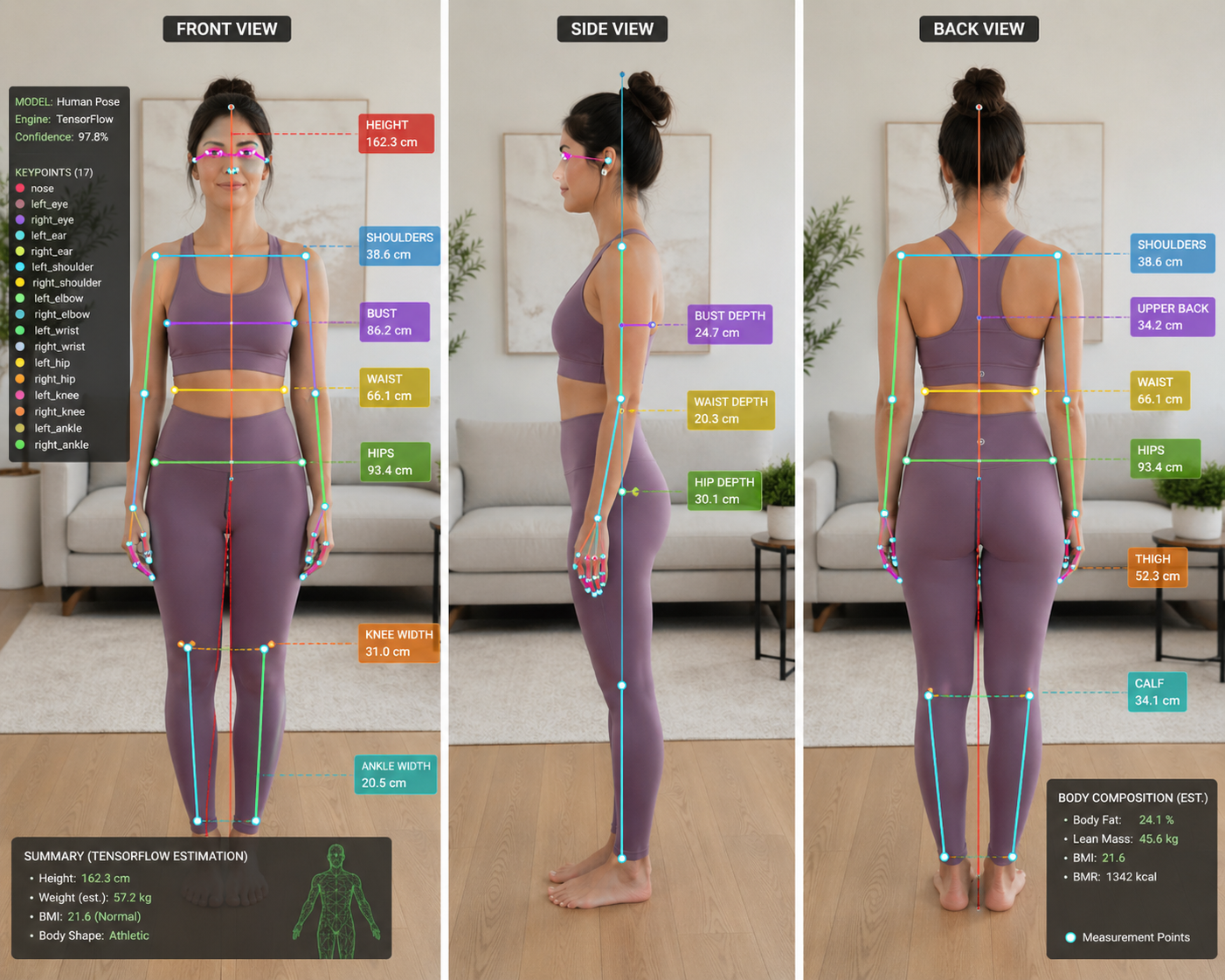
AI-assisted measurement systems are emerging with a simple goal: to make measuring more repeatable and standardized. Rather than depending entirely on individual interpretation, technology can help apply the same logic every time a measurement is taken.
That does not mean replacing the tailor.
Far from it.
Great tailoring is still an art. Fit preference, styling, drape, body asymmetry, posture corrections, and garment construction still require human experience and judgment.
But measurement itself may increasingly benefit from support.
The future may not be human versus technology.
It may be human expertise combined with greater consistency.
Because even the best tailor in the world is still human.
And when it comes to great fit, consistency matters.