Why Size Issues Are Quietly Killing Fashion E-Commerce Profits
For many online fashion brands, profitability is won or lost in the returns process.
- fashion return rates
- fashion ecommerce returns
- clothing size issues
- wrong size returns
- reduce ecommerce returns
Fashion e-commerce looks glamorous from the outside.
Fast growth. Beautiful branding. Influencer campaigns. New collections landing every week.
But behind the scenes, many online fashion retailers are fighting a much less attractive reality:
Returns.
And for countless brands, sizing issues sit at the center of the problem.
A customer orders a dress in medium. It arrives too tight around the waist.
A jacket fits perfectly in one brand but feels oversized in another.
A pair of sneakers looked right online but somehow feels wrong once worn.
The result?
Back in the box.
Across fashion e-commerce, returns have quietly become one of the industry’s biggest profit killers. While return rates vary by category and market, fashion consistently ranks among the highest-returned sectors in online retail.
And sizing uncertainty is often one of the biggest reasons why.
Anyone who shops online knows the dilemma.
Should you buy your usual size?
Size up?
Size down?
Read the reviews and hope someone with a similar body shape has already solved the mystery?
Even loyal shoppers experience frustration. A size medium in one brand may fit like a small elsewhere. A pair of trousers ordered last season suddenly fits differently after a supplier change or new cut.
For customers, this creates uncertainty.
For retailers, uncertainty creates cost.
Because every return triggers a chain reaction few shoppers ever see.
Shipping costs increase. Warehouses process incoming products. Customer service teams handle complaints and exchanges. Inventory becomes harder to manage. Some returned products cannot even be sold again at full price.
Margins shrink quietly in the background.
This becomes especially painful in fashion because profit margins are often thinner than consumers imagine.
Many brands are not making large profits on every sale. Once marketing costs, payment fees, warehousing, discounts, packaging, and logistics are accounted for, there may be surprisingly little left.
Then comes the return.
A single returned order can erase profit from multiple successful purchases.
In some cases, lowering returns by only a few percentage points can have an outsized impact on the bottom line.
For certain fashion retailers, the difference between struggling and profitable may come down to operational efficiency — and returns are one of the largest levers available.
That reality is forcing brands to rethink an uncomfortable question:
What if the problem starts before checkout?
The issue is not always product quality.
Sometimes the customer simply ordered the wrong size.
And often, not because they made a bad decision.
Because they had to guess.
Traditional size charts were designed for simplicity, not precision. Height and weight guides help only marginally. Customer reviews can be contradictory. And fit recommendations based solely on purchase history rarely account for body shape.
The truth is simple:
Most customers still buy clothing online with a degree of uncertainty.
That uncertainty creates hesitation before purchase — and disappointment afterward.
Increasingly, fashion retailers are beginning to explore new solutions.
The goal is no longer simply to sell more.
It is to help customers buy better.
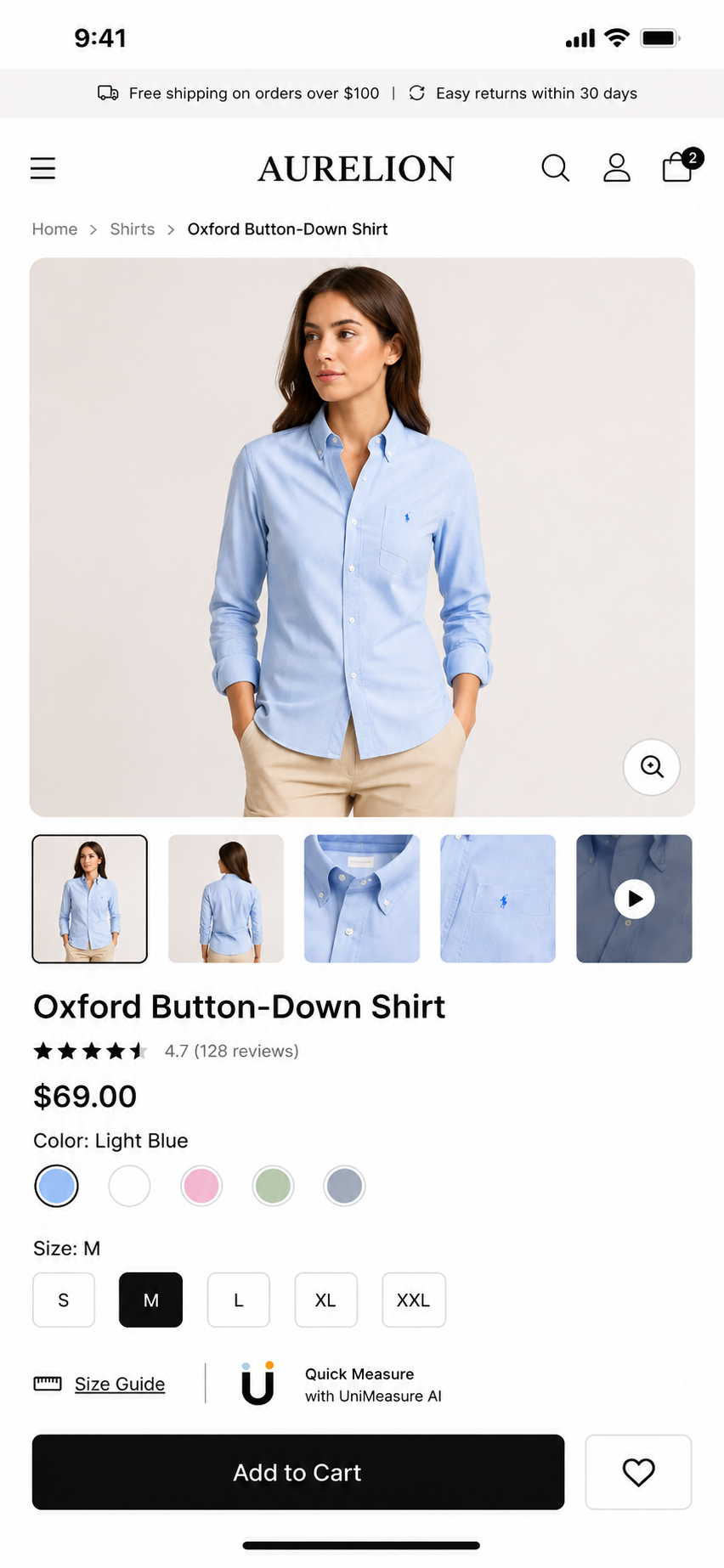
Technology that improves size confidence is becoming a growing priority across fashion e-commerce. Camera-based body measurement, AI-assisted sizing, smarter fit prediction, and product-specific recommendations are all emerging as ways to reduce friction in the customer journey.
Not because fashion has become more complicated.
But because expectations have changed.
Customers want convenience without compromise. They want confidence before buying.
And brands want fewer costly surprises after delivery.
The future of online fashion may not belong to the webshop with the biggest advertising budget.
It may belong to the brand that gets sizing right.
Because in e-commerce, the best return is often the one that never happens.